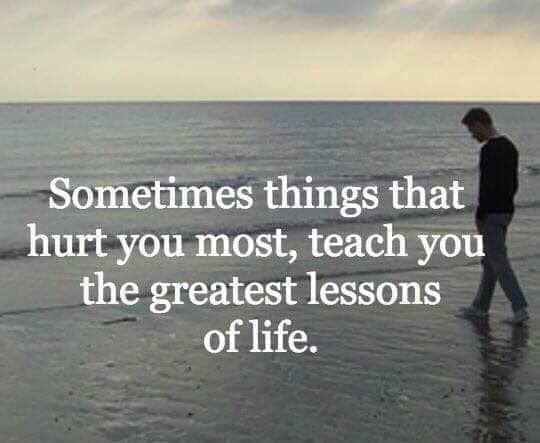
This was originally posted in 2020, and wow has this edit evolved from what was kind of a throwaway post.

Mmm.
*nods*
Reeeeeeeally makes you think.
*gazes contemplatively at the horizon*
. . .
Wait.
What if…
What if we could learn super important things under pleasant conditions?
And what if it’s okay to be suspicious of people who would rather sugarcoat the thing that’s hurting you than just acknowledge that it sucks that you’ve been hurt?
In 2018, starting therapy for the first time kicked off a sort of slow-motion Jenga tower collapse for my mental health that has ultimately been pretty beneficial.
I was never going to address my underlying foundational issues if I never even acknowledged having built an elaborate infrastructure on top of them.
I went in because I was a li’l down and have since covered severe depression, anxiety, neurodivergence, trauma, complex trauma, masking, closeting, disorganized attachment, dissociation, dysregulation, grief, a whole lot of suppressed rage, and (crucially for this post) burnout.
Jenga!
But that’s not actually the focus of this post. At least, not directly.
I’m bringing up all that business to highlight how I actually failed to learn some important life lessons, for several decades, on account of the things that were hurting me the most.
Whereas the reasons that I am doing relatively well today can be attributed to the things that did not actually hurt me.
In terms of “things that hurt,” September 2024 was a doozy for me.
It definitely could have been much worse, but just as certainly, it was not awesome.
It’s already a rough month for me, emotionally, because it’s a sad anniversary.
Then, this September started out with my partner and me getting COVID.
I had to miss an opportunity I’d really been looking forward to, and eventually ended up not hosting any of several get-togethers I’d been planning for a while.
Disappointing, but not dire.
The month ended with the most destructive climate disaster in the recorded history of the United States of America hitting the entire region I’ve recently begun to call home.
Ultimately, on a personal level, I am doing okay.
The fact that I am doing (more or less) (relative to the situation) (as much as possible under the circumstances) okay cannot be attributed to either coronavirus or the fact that there was a hurricane in the mountains.
I will not give those bitches the credit of being my mentors.
My Hurricane Helene story is not at all dramatic.
A part of me is oddly ashamed of this fact, as though my experience had to be more harrowing in order to be worth sharing.
But I’m pretty sure that’s also the part of me that didn’t think I merited therapy in 2018 because I was regularly going to the gym and doing my job.
Honestly, I slept through the worst of the storm.
I woke up early with no power.
I texted with my coworkers to confirm that everyone was okay, and to accomplish what little we could without electricity and with inconsistent (ultimately nonexistent) internet access.
I optimistically and/or naively believed that I might miss as many as several hours of work that morning.
After I stopped being able to send or receive texts, I lay down on my couch, pulled up a blanket, and just listened to the wind and rain.
I’m originally from the Midwest. I’ve seen a storm or two.
What I could see from my window hardly looked like a full-blown run-for-cover situation. The trees were swaying and I assumed there would be some downed branches, but I wasn’t particularly worried about my own safety.
My yard had a little temporary stream running through it, but it was just traveling through to a drainpipe, on down the hill, and even beyond the neighboring properties.
I took a little underwhelming video, told myself it would all be blown over by the afternoon, and dozed for several hours, confident that my phone would wake me with text notifications as soon as it was time to get back to work.
I figured that I would still be able to keep my noon haircut appointment the next day.
It was several days before I really understood what had even happened.
Prior to Helene, some friends had invited us along for a beach trip.
We hadn’t yet decided about our plans, but after spending a few surreal and disjointed days at home without power, internet, or water, we took them up on the offered room in their rental.
The first time we stopped at a “normal” grocery store in South Carolina, I was overwhelmed by the abundant humming, availability, and functionality of everything around me.
I teared up and then accidentally made eye contact with a random employee, whose facial expression changed from nonchalance to what looked like active concern. I quickly looked away and walked toward the cheese island as though I had a purpose.
Looking back through the pictures from our “vacation,” my eyes consistently look tired and dull.
Still, for our early October wedding anniversary, I wanted to dress up and go somewhere nice to eat, like we always do, because I was eager to have something pleasant to look forward to.
I wore a shrug that I’d purchased in a building full of beautiful art, the insides of which have since been completely devastated by a flood of muddy water.
Getting ready to go out for seafood, I imagined the charming little garment being swept along the current with all the other art-turned-debris, and it seemed almost blasphemous to wear it because its existence felt unexpectedly sacred.
I am able to work remotely, but some people at my workplace need to be on-site.
For those staff, the organization was able to acquire lots of port-a-potties for the weeks it is taking for the local water system to be repaired.
One of the johns apparently has a disco ball hanging in it. The subject has come up a few times in various meetings.
I alternate between finding this depressing and finding it encouraging, but in either case, I find it hilarious.
It is not practical for me to go there and get in the way of people with limited resources trying to accomplish important jobs, but I truly hope that someone captures some amazing photos of it, even (maybe especially?) if there’s visible poo.
Step aside, dumpster fire. If there is a more apt visual metaphor for life in America right now than a disco ball attempting to liven up up the atmosphere in an enclosed plastic emergency receptacle for human waste, I don’t know if I’m ready to see it.
As the scope of the impact of the storm became clearer, friends and relatives from other states reached out, asking how they could help.
My response would have seemed blunt to me ten years ago.
I keep repeating like a broken record that money is the most useful thing from afar, and that money should either go to organizations already doing good work in affected communities or to individuals/businesses that are less likely to receive significant support from better-resourced benefactors.
I understand how this response can feel disheartening for folks who do not have much money to spare.
I know that they would love to share their time and energy.
I know that they want to feel like they’ve done something substantive.
Of course the thing that people don’t have is more “useful” under capitalism than anything they are able to actually offer.
If I put every cent of every asset that I have in the world towards recovery efforts, it would hardly register on the scale of financial needs required for basic regional stability.
I understand that expressions like “sending good vibes” and “thoughts and prayers” are readily available constructs for people without access to a whole lot of practical means to help.
I love the humans behind these words, but I still resent hearing them.
I used to think it was cliché to say “there are no words” in response to terrible events, but I’ve grown to appreciate that framing when I encounter it in the wild.
It feels more like an acknowledgment than a dismissal.
It doesn’t land (at least for me) like a race to get to the other side of the thing there are no words for.
Even more than we tend to struggle, as a culture, with the idea that “there are no words,” it can be challenging to sit with the idea that “there is nothing to be done.”
When someone or something is gone forever, actions are pretty much always an acknowledgement of the reality of that agonizing divide between presence and absence.
Taking action requires at least some recognition that time will continue moving forward without that person or that place or that way of being, no matter how unfathomable that might seem.
Some actions are more focused on tending to the pain of the absence rather than on getting past it, but even those actions – engaging in ritual, offering food and care, creating memorials – serve as reminders that reality has shifted in a permanent and fundamental way.
I actually don’t mean “there is nothing to be done” in a hopeless or despairing way, although I’m aware it can hit like that.
I do not mean that there is nothing to do, moving forward.
There is so much to do, and many people are doing it, to one end or another.
What I mean is that there is nothing to be done about the fact that this thing has happened.
Nothing will take it away.
We are here.
We are irrevocably in it.
After the initial frenzy of action required to just survive the event, we cannot bypass the reality of the impact that it has had by pretending to quickly get back to “normal” (a state that was already pretty tenuous).
Therapist Megan Devine has written that “there are some things that cannot be fixed – they can only be carried.”
She said that about individual grief, but it applies collectively.
There is a lot of social pressure for us to bypass or erase the pain that accompanies the recognition of loss that manifests as a drive to find solutions, to move forward, to fix the gaps.
And to be clear, the efforts that people have already made to hold steady, offer support, clean up, and in many cases prepare for rebuilding are not what I am referring to when I say “social pressure to bypass.” That’s just survival in community, and it’s vitally important work.
Rather, there is something necessary and grounding about occupying the ineffable, uncomfortable space of acknowledgment in which there is nothing to be said and nothing to be done.
And this is what I think we are allowed and even encouraged to avoid.
I haven’t fully sat there yet, myself. I know that I still need to.
I have so much desire to fix things so that I won’t have to endure that space, but I also know that I will need to learn to carry all of this new brokenness forward.
I’ve just produced an awful lot of words on the subject of “not having words,” but that tracks for me.
In part, I am writing to help process my own grief and anger, and this post is just a portion of that processing that I’m willing to polish up a bit and share with an (admittedly small) audience.
I am finding that I am slow to admit that this has been traumatic for me, on account of the fact that so many people have it so much worse.
I did not “deserve” to remain relatively unscathed because of any choices I made or because of any divine intervention.
My own wellbeing was just a semi-random combination of privilege and chance.
I have not lost any loved ones.
I have my health.
I have my home.
I have my job.
I had a safe and comfortable place to go for part of the time that the basic utilities were out in my house.
How can I allow myself the luxury of tending to my own trauma when it’s so damn cushy?
But there is no benefit to this kind of competitive comparison.
The pervasive idea that we have to earn compassion from others through our own suffering (and that therefore when we have not suffered “enough,” according to whatever arbitrary metric we choose to enforce, we do not “deserve” certain forms of external support) is a myth that promotes division and props up exploitative systems.
And here’s where I’ll loop back around to that introductory bit about mental health and burnout.
I recently read in an article by social psychologist Devon Price that
“…clinical burnout sufferers typically push themselves through unpleasant circumstances and avoid asking for help. They’re also less likely to give up when placed under frustrating circumstances, instead throttling the gas in hopes that their problems can be fixed with extra effort. They become hyperactive, unable to rest or enjoy holidays, their bodies wired to treat work as the solution to every problem.”
Price also writes about the importance of rest in recuperation:
“clinical burnout sufferers may require a year or more of rest following treatment before they can feel better…”
Anecdotally, I can affirm that it took lots of emotional turmoil, monumental personal effort, and an incredible amount of external support to get my life situation into the kind of shape where I could access the kind of rest that actually felt restorative.
I did all that work while still burned out and before resting, and it’s definitely taken more than a year to start to feel the benefit of that rest.
For all the growth and healing I’ve experienced in the past three years, when I contemplate hypothetically attempting to step back into my previous lifestyle, I can feel myself shutting down physically, emotionally, and cognitively.
The vast majority of people who experience burnout do not ever get a hint of a fraction of the time and space they would need to legitimately “heal” from that kind of trauma.
Rather than using my own story as a means of indulgently downplaying my actual needs – “poor me, I don’t have it hard enough to justify taking up any space!” – I am sharing it here to stress how everyone will need more time to come to grips with and to recover from Helene than they probably feel like they are entitled or able to have, and certainly more than they will actually get.
Even someone with the relative security, privilege, protection, stability, and institutional support that I have will require far more time and rest than I am yet able to admit.
That’s not an appeal for sympathy.
I am both fine and not fine, which is actually fine.
Rather, it is a realistic description of the actual circumstances that thousands of Appalachians (and others in disaster-affected areas) will be facing in the coming months and years, long after the flurry of news coverage has died down on a national scale.
People will not be given, nor are they likely to give themselves, nearly enough time or space to process what has happened.
And that’s just for the folks who happened to fare reasonably well.
Everyone will be inclined to dismiss their own trauma, and there are a lot of systems in place to encourage that.
Of course, this has also been the case for most people in most catastrophes for most of the history of humanity.
(And there’s that effort to downplay by comparison, as though the fact that other terrible things have happened somehow makes this terrible thing matter or hurt less than it does.)
I have been hesitant to write about anything helpful that I actually have done, because for me to do that as an individual, it feels like humble-bragging at an exceptionally tacky time for an ego trip.
Then again, I feel like if I don’t acknowledge or document anything I’ve done, it looks like all I have done is think and type and be reasonably comfortable.
I really have done things to contribute to society and support other people, and I’m also well-situated in my day job to support some important work that needs to be done by people with better qualifications than me.
In an earlier draft of this post, I included a long list of things that are gone or severely damaged, but I moved that to a different piece of writing that may or may not end up on this blog.
This post is meant to convey that, in the process of creating proactive reframes to cope with horrible events, it’s important to avoid elevating the things that hurt over the things that help.
Any lessons that I have learned from pain have, in fact, been fairly shitty.
The “greatest lessons” have consistently come from the things that actively helped me heal (even when those lessons have come by apparently passive routes, like “taking more breaks,” or when they have been accompanied by their own unique kinds of discomfort).
That has been true for burnout, and it will be relevant for Helene recovery (both of which will be ongoing for the foreseeable future, for myself and for others).
And so instead of listing what hurts right now (which is easy enough to do), I’m including a list of things I’ve noticed that have felt healing.
Of course if I expanded this little list beyond my firsthand experience, to include beautiful and inspiring things that humans in this area have done over the past few weeks, it would be enormous and include much more dramatic examples.
But my own stories are small.
They aren’t exactly headline material.
They’re just unremarkable, achievable, invaluable little moments where acknowledgement, connection, and soothing could unfold in the first couple of days after the storm.
When the power was out for days, our next-door neighbors grilled a bunch of meat from their freezer and made up plates to share around the neighborhood.
Other neighbors offered the use of their gas range to make coffee.
Someone hailed me from their window to offer me shelf-stable food because they were heading out of town.
A pastor gave us a case of water bottles when we just happened to walk past his house.
Friends going out of town to stay with family offered to pick up any essentials we might need or want.
A coworker gifted me with cash to use while power wasn’t working at most stores.
Someone from a food truck offered us breakfast burritos in a Food Lion parking lot on a day that we had not properly planned to make sure that we would get lunch. Our initial reflexive response was to politely decline, but we reconsidered, and there was wisdom in accepting hot eggs from a stranger.
Because some of the things I’ve written above could easily be misconstrued, and because this is Pith Rant, I’ll be obnoxiously direct and repetitive in my conclusion here.
Yes, I did choose not to include a litany of terrible things in this post, and yes, I did instead choose to highlight a list of pleasant things.
No, I am not suggesting that simply focusing on the positives is a sufficient or helpful response to any kind of tragedy.
I am challenging the idea that pain and suffering are our “greatest” teachers, and I am challenging the ways in which that fear-driven mentality is actually often used to justify indifference towards the pain and suffering of others who “had to be taught lessons.”
The “greatest lessons” may be uncomfortable, but they don’t actually have to hurt.
We did not actually have to learn that climate change is dangerous through so much loss (not just from Helene, although that has been the focus of this post).
The current state of affairs was never inevitable.
Choices have been made by people in positions of power and influence.
No one specifically chose for a clusterfuck of circumstances to develop into a hurricane traveling along a mountain range in the aftermath of already massive flooding, but certain people have chosen to continue exacerbating the anthropogenic side of climate change with zero concern for the loss of quality of life and loss of actual life that always has and will continue to most directly affect other people.
Although I cannot personally speak for the individual values of anyone with enough money to be held directly accountable for the increased frequency and severity of “natural” disasters, I think that it is fair to assert that these kinds of folks are at some level motivated by fear of experiencing the kind of hurt, loss, and suffering that their choices have perpetuated.
The urge to defensively hoard resources comes from a scarcity mindset, among other things, and “scarcity mindset” is a lesson that we learn from trauma.
It’s really not the best lesson, but it’ll sure get ya through the night.
(That’s massively oversimplified, but I’m trying to wrap this up.)
In general, the lessons we learn from pain teach us to try to avoid more pain at all costs.
The lessons we learn from recovery are what allow us to grow alongside the presence and inevitability of pain.
Nothing has ever been fine, friends.
And yet here we are.
I’m not really following any best practices for enhancing the visibility or general appeal of this blog, because it takes a lot of time and energy to keep up with all that, and it does not always make sense in my own life to allocate time and energy to this particular hobby space.
For what it’s worth with my limited influence, here are a few organizations doing important work who will do good things with Hurricane recovery dollars for much longer than the few weeks immediately following the event:
 Pith Rant
You must be logged in to post a comment.