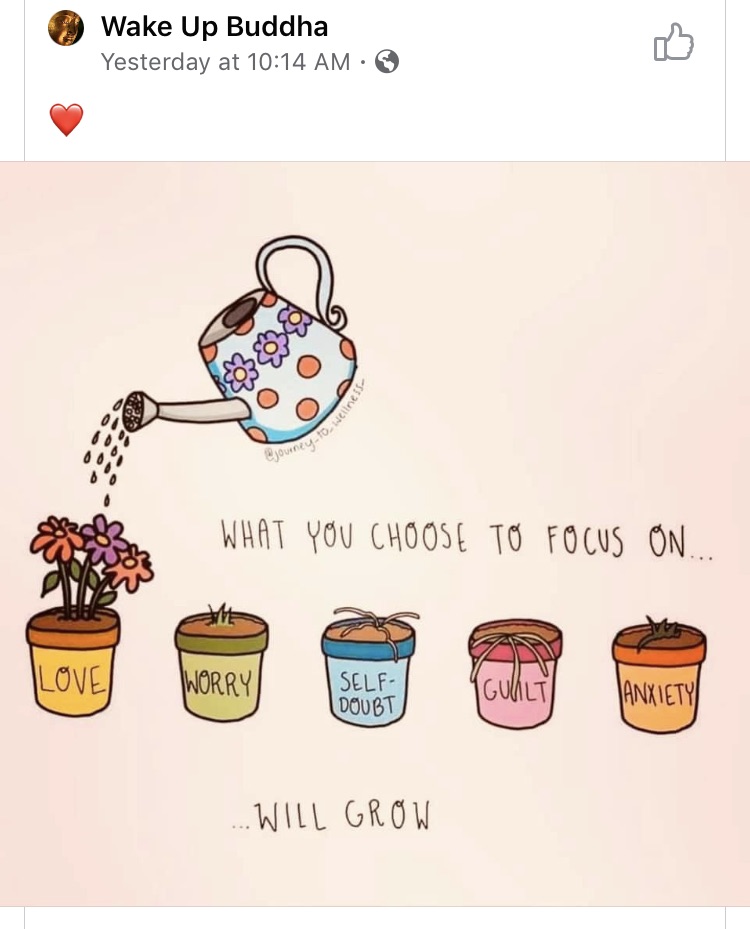
A cartoon watering can hovers over a row of cartoon flower pots labelled ‘love,’ ‘worry,’ ‘self-doubt,’ ‘guilt,’ and ‘anxiety.’ The ‘love’ pot is directly under the watering can and is being sprinkled with water droplets, and has three pink daisies growing out of it. The other four pots contain various kinds of wilty, dying leaves. The black all-caps handwritten font reads, “What you choose to focus on… will grow.” The sharer is “Wake Up Buddha,” and in small gray text underneath the watering can it says @journey.to.wellness.
Buddhist-lite-inspired Christian types are surprisingly pro-choice when it comes to things like poverty, trauma, and mental health.
Anyway, unrelated, I have a few queries here.
I’m getting three takeaways out of this illustration:
1) we have way more “bad” emotions than “good” emotions available to choose from
2) focusing on “good” feelings means that the “bad” ones will eventually not be problems anymore
3) “bad” feelings are conscious choices
And so, my queries are thus:
1) Why is “love” the only positive plant this person owns?
I promise I get that this little cartoon is not meant to be either comprehensive or literal, but the analogy should still track within the framework in which the image exists, right?
And contrary to what The Beatles told your parents and/or grandparents, love is not all you need.
Wouldn’t things like faith, confidence, pride, and peace be good to water? But they don’t even have their own metaphorical pots.
And love isn’t exactly mutually exclusive with any of these things, anyway. They can and do functionally coexist.
I mean, “love” is also not necessarily mutually exclusive with “hate” (which doesn’t have a pot in this representation), but at least the visual of watering a “love” plant instead of a “hate” plant would be less ambiguous than watering only the “love” plant at the expense of the rest of the potted plants in the greenhouse of your mind.
2) Do we really want to murder our guilt through neglect?
I don’t see a shame pot anywhere in this picture, but that would probably be a healthier emotional-state-plant-metaphor to neglect.
The difference between “guilt” and “shame” is commonly understood, in the world of popular psychology, as the difference between thinking that “I did bad” and thinking that “I am bad.”
It has been argued that guilt can actually be a positive motivator.
Not that it’s good to seek or wallow in guilt, or to use guilt trips to manipulate other people into giving you your own way. But feeling regret about our own inappropriate behavior can actually help encourage us to make amends for it.
Broadly, guilt is more likely than shame to produce positive outcomes.
Unless what the guilt produces is shame.
In which case there will probably either be more behavior that induces that same guilt, or avoidance of things that induce that same guilt, either of which will probably result in more shame.
Talk about your vicious cycles.
So anyway, if you’ve chosen to dehydrate your guilt, I think that might just make you a sociopath*.
I don’t see “worry” and “anxiety” as fully synonymous, but I do feel like their respective plants would bear similar fruit.
Or at least, they would, if it wasn’t your responsibility to choose to let them die.
After splitting hairs about the difference between “guilt” and “shame,” I had to google the difference between “worry” and “anxiety.” A common thread seemed to be that “worry” is grounded in circumstances where it’s realistic to be concerned, whereas the experience of “anxiety” is more generalized and not necessarily centered around an accurate or likely outcome.
So the relationship seems fairly similar to that between “guilt” and “shame,” in that one is a realistic response capable of motivating a proactive behavior: i.e., apologizing for hurting someone’s feelings (guilt), or going back inside to make sure you turned off the oven because you can’t remember if you did (worry).
The other is maladaptive and/or hypersensitive and likely to lead to self-defeating or harmful behaviors: i.e., giving the cold shoulder to an already-hurting person after defensively insisting that your actions couldn’t possibly have caused harm because that wasn’t your intention (shame), or checking the oven multiple times before leaving for work but still fixating all day on the possibility that your house might burn down while you’re gone (anxiety).
I appreciate how those definitions allow space for a whole spectrum in between something that’s pretty reasonable and potentially even helpful, and something that’s pretty fucked up and potentially quite damaging.
Within that framework, the complementary side of the spectrum to “love” seems more like it might be something like “obsession” rather than “hate.”
And just to stay consistent with the plant metaphor, biodiversity is actually good for plants. Complex complementary relationships with other plants are broadly good for plants.
So maybe rather than scorching our brain soil with pesticides to try and eradicate “negative” metaphorical-feelings-plants, it’s worth at least sometimes tending to all the metaphorical-feelings-plants instead?
3) What does this really tell us about our underlying perception of human nature?
I think that this crabby bitch right here actually and ironically has a much more positive worldview than the creator of this cute cartoon.
Because I don’t think we’re full of shitty weeds that we have to kill off in order to nurture our more beautiful parts.
I think we come into our own consciousness full of a beautiful ecosystem of intricately interlocking parts that need one another in order to thrive.
Now, I don’t believe that whoever created this li’l doodle and paired it up with this text was going for anything deeper than “put your energy into the things that help rather than into the things that hurt,” which is really not such a terrible message to perpetuate.
But the fact that it’s represented as “let the bad plants inside of you die” rather than “you are full of plants – take care of them!” feels darker than that.
So I kinda low-key think that the symbolism this person innocently chose to use probably feels a lot more intuitive to folks who believe that human beings are inherently tainted (say, for example, by the stain of Original Sin), and that people have to work hard to choose to be good, and that lots of people simply choose to water that bunch of shitty weeds they came into the world with instead of dedicating themselves to watering the Love Daisies of the Lord.
I’m not saying that I think that’s what the macro creator was trying to convey.
But it does kinda seem like it lives underneath what they chose to focus on.
And let’s remember to keep looking underneath, in general.
*I am trying to be mindful about how I’m using clinical labels, but it’s my understanding that “sociopathy” is actually not a DSM-official diagnosis. “Anti-social personality disorder” would be the most approximate diagnostic label, I think. At any rate, sociopathy is a general enough concept for which “lack of ability to feel guilt” is literally often included in the definition, and there are certainly several robust and important potential tangents that could be developed here, but alas, they are in fact tangential in the context of this fairly fluffy post.
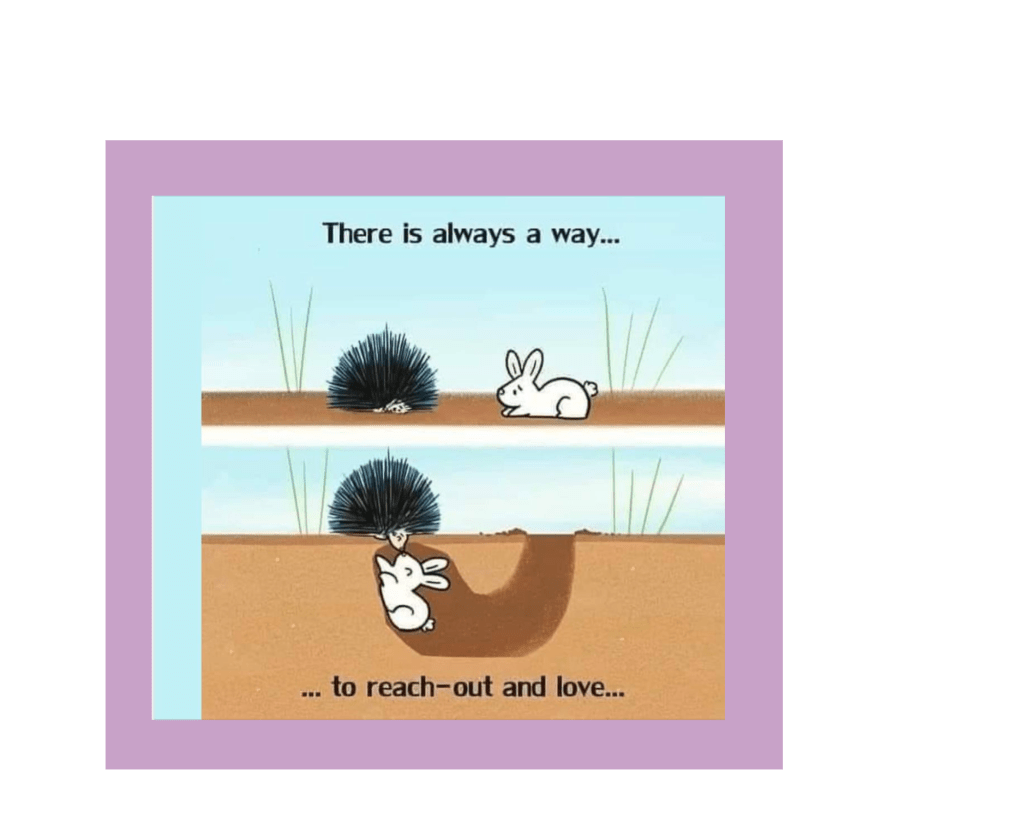
ID: A two-panel cartoon. The top panel features a porcupine curled up into a spiky ball on the left, and a concerned-looking white bunny rabbit on the right. The bottom panel shows that the rabbit has dug a tunnel underground and is meeting the porcupine nose-to-nose, from underground, because the porcupine is still in a ball with its face pointing down. The black san-serif text says “There is always a way…” at the top and “…to reach out and love…” on the bottom.” The original creation source was not included in the screenshot.
That stupid porcupine clearly doesn’t have any idea what it’s doing, so if it’s going to get its shit together, it clearly needs to be saved from itself by a concerned, selfless, innocent, absolutely informed, and incidentally adorable bystander.
We don’t need to see the comic where the bunny cries at the still-depressed porcupine for not appreciating all the hard work it took for the bunny to dig that intimate face hole, because that would just not be realistic.
So, that was my off-the-cuff “Hi, I’m a porcupine” response.
But seriously.
How the fuck is this comic supposed to be about a heroic bunny instead of a sad porcupine?
Why is it hard to imagine that the bunny could show love by recognizing and respecting the porcupine’s fairly unambiguously unavailable body language?
The message here is 100% about making the bunny feel better about believing that it’s helped the porcupine, regardless of the actual impact of its well-meaning actions or whether the porcupine really appreciated them.
Superficial armchair analysis of attachment styles is all the rage these days among self-help and pop-psych types (oh hai), but I’ll begrudgingly admit that it’s popular for a reason.
The utility of the Attachment Theory framework renders it susceptible to the reductive chicanery of confident Insta-experts who’ve probably only read the cliffs notes of the blurb of a review of any source material about Attachment Theory.
But then again, you’ll have that with all kinds of worthwhile concepts, like “practicing gratitude,” “setting boundaries,” and “self care.”
And, for as snooty as I sound in those preceding paragraphs, it’s not like I have the professional chops or an appropriately exhaustive literature review in my back pocket to Prove My Own Superiority.
I’m just an angry ex-academic who likes to poke holes in things.
At any rate, for readers who aren’t familiar with popular Attachment discourses, here’s a reductive informal introduction that will allow you to read this blog post without any additional research but is absolutely insufficient for anything else, so please don’t quote me to your therapist as though I’m an authoritative resource:
A fundamental idea behind attachment theory is that our early interactions with caretakers provide the basis for and inform the development of our relational patterns as we grow into independent humans.
Although there is some variation in the specific labels that are used, how they’re defined, and how to apply the concepts, Attachment Styles are commonly divided into four categories: Secure, Anxious, Avoidant, and Disorganized. (Not my preferred framing, but again, my goal is just to give a brief overview that will help contextualize my argument about this comic rather than to offer a comprehensive review of the entire history of the theory.)
A significant limitation to this simplified, popular framing is that a lot of advice basically boils down to, “There are three really bad attachment styles, and one good one that we should all aspire to achieve. Also, among those three bad ones, there’s one that’s extra super bad.” (Oh hai.)
A nuanced understanding of the theoretical framework demonstrates that these categories are not discrete, fixed, absolute, or mutually exclusive.
But if you Google the topic, you’ll come across all kinds of grids and checklists that frame them as though they are.
Unsurprisingly, I don’t find that helpful.
The idea that there are permanently, fundamentally “securely attached” people is just as problematic as the idea that there are “healthy” people who are fundamentally better at existing in human bodies than “unhealthy” people.
Even the Healthiest person will get sick or injured or experience the natural wear-and-tear of aging. They’ll be affected by their environment, and they’ll sometimes make choices that aren’t perfectly Healthy, after all.
(Then again, I also tend to lean into the reasoning that “we’re all going to die some time” when judgements of other people’s Unhealthy Choices arise, so, grain of salt if you want to think you’ll be able to out-health my conclusions.)
By the same token, a securely attached person doesn’t not experience anxiety – they just navigate it differently, in a way that doesn’t always overtly read as anxious.
(Then again, I tend to lean into the reasoning that “we’re all bound fuck up at some point” in discussions of Ideal Personal Development and Relational Success, so, grain of salt if you want to think you’ve already Done All the Work and Done It Right.)
No one person is absolutely only one way all the time, with all people and across all circumstances (and the existence of hypothetical exceptions here does not negate the generalizability of this statement).
And really, all three of the insecure categories are defined by varying degrees of and responses to anxiety.
Overtly Anxious-leaning types will broadly tend to cling to or seek connection when they sense a relational threat. Avoidant-leaning types will broadly tend to push back or seek isolation when they sense a relational threat. Disorganized types will fluctuate between these types of responses with more frequency and possibly more intensity than will their more predominantly Anxious or Avoidant counterparts.
I’ll be the first to admit that this cursory introduction is lacking, so please go and do your own research if you’re interested in learning more (with healthy skepticism toward anything that makes it seem easy), and if you do already have a lot of knowledge on the subject and think that you could do a better job than me, please go ahead and do so in a space that works for you, and also please don’t share it with me.
An “Anxious/Avoidant” dynamic is fairly common in human relationships, romantic and otherwise.
I’ll continue leaning into this contrastive binary for most of my examples, with the consistent reminder that things are rarely so simple in real life.
This dynamic is at the heart of a lot of buddy comedies, where one party is emotional and messy in order to serve as a foil for another party who is reserved, tidy, and standoffish.
The Stick-in-the-Mud learns to let go and loosen up a little, but The Hot Mess doesn’t necessarily have to learn to calm their tits or get their shit together.
It’s more often the case that the stand-offish half of the duo is both more unsympathetic and more dynamic. They need to grow and learn to accept their chaotic friend/love interest, but the chaotic friend/love interest already intrinsically understands how to be emotionally open, so what other lesson could they possibly have to learn? It’s not like we should expect them to start self-soothing or respecting people’s boundaries or anything.
It makes sense that Anxious-leaning folks are more likely to make a sympathetic appeal on their own behalf, by revealing and even potentially emphasizing their relative defenselessness in a given situation.
Whereas Avoidant-leaning folks are far more likely to (wait for it) avoid exposing their weak spots and anxieties.
In reality, of course, just as not everyone who has overtly Avoidant tendencies is a heartless asshole, not everyone who has overtly Anxious tendencies is an emotional parasite.
The important thing to remember here is that we’re all capable of being parasites, and we’re all capable of being assholes!
(See if you reflexively responded either “Not me!” or “Oh god I’m both and that’s terrible!” and then have fun unpacking that. You’re welcome.)
On account of what a strongly negative reaction I had to this cute little comic, let’s examine what that extremely Anxious “emotional parasite” pattern can look like.
There’s a subcategory of folks with Anxious relational patterns who really seem (to cantankerous ol’ me) to come alive at the prospect of others’ misfortune, like “Here’s my time to shine!”
And, here let’s pause to take another moment to recognize that I am a miserable asshole with a transparent bias against an All-Anxious-All-the-Time modality (in terms of relational attachment, because I actually experience a lot of anxiety a lot of the time – I just index it and respond to it in less overtly Anxious ways in terms of a lot of interpersonal behavior.)
Here, I’m describing a specific subcategory of a relational style that is especially perplexing for Avoidant-leaning Me to engage with, not making one negative generalization that’s meant to characterize anyone who is on the more Anxious-leaning part of the attachment spectrum.
I’ll label this subcategory “Grief-Seeking Missiles.”
(Other labels I considered include “Emotional Vampires,” “Emotional Vultures,” and although “Ambulance Chasers” is a label with more overtly financial and legal implications, I’d contend that it still fits the general pattern of crisis-driven opportunism.)
I was never a fan, but I grew especially wary of GSM types while I was grieving the loss of my father.
At times when I actually would have liked to let go and be at least a little bit emotional, I felt compelled to appear more stoic because I could practically physically feel it when I was approached with this apparently eager anticipation for the satisfaction of my tears.
One simple and not-uncharitable explanation for the GSM relational pattern is that these folks treat others the way they want to be treated, and they are in serious need of being offered a little basic empathy. They want someone to be willing to encourage them to cry.
They want people to be focused on them and tend to their needs and check on them frequently and buy them flowers and remind them how much they’re loved.
And is that really so terrible?
Of course not.
It’s okay, and it can even be healthy, to want these things.
I’ve framed it in a way that could read as “selfish” above, but of course it’s really not the worst thing for a person to want recognition, validation, and even celebration. (And if your response to that is something like “Actually, yes it is!” you’re welcome, again – there’s another shiny new nugget to share with your therapist.)
The disconnect occurs because they can’t admit that they want these things, because at some level they think that it would make them greedy and bad people.
So this GSM subcategory of Anxious-leaning Attachment can manifest as a combination of jealousy and projection. They want the kind of attention they’re pouring out onto others (who haven’t necessarily sought it), while hoping for others to automatically reciprocate while also at some level resenting that “at least the porcupine has someone looking out for it.”
That kind of resentment would likely come across as petty if they said it out loud, so it’s reframed by the GSM as a combination of self-aggrandizement and patronizing pity.
“The poor thing just isn’t taking care of themself! Thank goodness I have such an enormous capacity for love and care, or they’d just keep suffering endlessly in silence with no one to offer them the support they so clearly need!”
If this description hits a nerve and you find yourself feeling defensive, I’d like to invite you to sit with that feeling and maybe even interrogate it a little, if you have the capacity.
(And, to be clear, saying “if you have the capacity” really isn’t meant as shade or as a challenge, although it could be used in those ways. I just don’t know where your emotional reserves are at today, friend. I don’t know how much energy you have to allocate to self-reflection. This is knowledge that only you have, and I’m not demanding that you push yourself in your own mind to prove your worth to an internet stranger who will never perceive, or care to try to perceive, the full scope of your depth and complexity.)
The GSM sub-category seems to be manifest in folks who, themselves, have significant emotional needs that are not being met. This merits empathy, but not necessarily attention, depending on the circumstance.
To be clear, I don’t disagree with the basic message of the words in this comic.
Having someone reach out can be vitally important for someone who is struggling to ask for help.
And there are always ways to show love to those who aren’t actively requesting it.
It’s just that digging yourself into a hole to demonstrate the strength of your desire to be the one who’s reached out before confirming that the hole is actually helpful is more likely to overstep than it is to Save the Emotional Day.
Also to be clear, it’s understandable that the bunny feels anxious about the fact that the porcupine (presumably a friend) doesn’t appear to be doing well.
It’s extremely reasonable to feel worried about people who are having a hard time, and even more especially worried about people you love who are having a hard time.
It’s just that managing your own anxiety about someone else’s discomfort by striving to deliver it straight into the face of an individual who was otherwise just existing adjacent to your anxiety isn’t necessarily going to help you manage your own anxious feelings any better the next time someone else is struggling, and meanwhile, there’s a good chance that the first person is still uncomfortable (and possibly now also annoyed).
I won’t pretend to have The One Advice to Rule Them All, but I would like to contribute a sincere suggestion that I, at least, have found helpful:
When you’re trying to decide what kind of outreach seems appropriate in a given situation with a particular person, run a quick self-scan to see if you’re actually addressing a concern of yours or theirs.
It can be hard to do this if you’re accustomed to perceiving yourself as a helper who never thinks of themselves, but like most things, it gets easier with practice.
And some people are likely to want exactly the same things that you do! In those cases, you will have great instincts to follow.
I cannot speak for all Avoidant-leaning folks, but for me, being asked about my preferences (whether by text, email, phone call, physical letter, or whatever) is just as good as (and usually actively better than) having to navigate the imposition of an inconvenient performative gesture that is clearly more about whoever is making that gesture than it is about me and my actual needs.
So if you’re not confident in your judgment, it’s truly okay to ask.
Brené Brown’s public-facing work has brought “vulnerability” to the forefront of popular discourse about relationships, and as with Attachment Theory jargon, it’s been a mixed blessing for folks with an interest in applied psychology.
I’ve both appreciated and struggled with her work.
This cartoon is a helpful demonstration of one of my stickier concerns.
Really, no one in this image has opted to be vulnerable.
And as I do value the importance of vulnerability in creating honest, intimate relationships, I am frustrated by simplistic advice like this that actually discourages its practice.
We’ll start with the porcupine, who is clearly demonstrating more defensive posturing.
I don’t think it’s fair to read the porcupine’s position as actively shameful or weak. All we can really tell from the image is that porcupine appears to be sad, and that it’s chosen to be alone. It’s protecting that choice with its natural spikes and with its body language.
But that bunny isn’t actually being vulnerable, either.
It’s avoiding the known threat of prickliness by relying on its own strength as a digger.
That is, it’s protecting itself by approaching the porcupine from a position of relative personal safety.
And to be clear, I don’t think that it’s fair to suggest that there is any shame in the bunny’s choice to not thoughtlessly embrace a face-full of quills.
Frankly, I don’t perceive any shame or weakness in either characters’ choice to protect themselves.
However, if the first image – that of the Avoidant porcupine and the Anxious bunny – were to be followed up by next steps that actually illustrate vulnerability, then it seems like the porcupine would have to uncurl on its own, and then seek out the bunny.
And the bunny would just have to be fucking patient and stay available, even if the porcupine’s outreach might happen at a time when the bunny didn’t feel all the way up for performing its dramatic outreach thing.
Realistically, of course, most of the work we do in life happens between these extremes.
It makes sense for the porcupine to sometimes meet the bunny halfway by offering some limited availability.
It makes sense for the bunny to follow up with the porcupine even after seeing that it initially appears to be closed off, with the recognition that it might not actually succeed at getting in when it wants to.
Relationships constantly call for active negotiation and situational adaptation.
If the basis for the relationship is pretty much always one party pulling away with the other party pretty much always reaching out, that’s more likely to generate fragile tension than comfortable balance.
And then again, there’s value in accepting our partners (romantic, friendly, professional, and otherwise) just the way that they are.
As an Avoidant-leaning person, I can confirm that there is a lot more “accept and respect Anxious people’s anxiety” propaganda out there than there is “accept and respect Avoidant people’s distance” propaganda.
(This is at least in part because more overtly Anxious types are often more open to requesting and even potentially demanding acceptance, while more overtly Avoidant types are often more likely to just shut down the possibility that they should have to ask for acceptance in the first place.)
Story time!
I have adopted a number of pet rats over the course of my adult life.
Recently, my partner had a couple from our current brood perching on his shoulders, and I was talking to him with several feet of space between us.
I noticed one of the girls kind of wiggling her butt, not unlike a cat about to pounce on prey. In fact, rats also do this when they are preparing to leap forward. I noted the movement, but my brain just said, “There’s no way she can jump as far as my shoulder. She’ll give up when she realizes that,” and I dismissed the thought.
I started to turn to walk away at just about the same time that she chose to go for it, and tried to jump from his shoulder to mine.
Naturally, I was startled by the sudden movement, and turned my body towards my partner and this unexpected furry projectile. It was a pretty long distance for her to make anyway, but had I not moved, she probably would have succeeded.
As it was, my face ended up in the position my shoulder had occupied a moment before, and all four of her sharp little feet landed between my upper lip and my chin.
Needless to say, this was not the solid landing she’d been aiming for, and she sort of rebounded off of my chin and I was able to catch her before she fell all the way to the floor.
After the initial shock wore off, we started laughing, but then my partner was like, “Oh god, you should go take care of your face.”
It looked a lot worse than it really was. The scratches were shallow, and they fully healed within a few days. But in the immediate aftermath, when I had four bloody lines dominating the lower half of my face, it looked pretty intense (and honestly, also pretty bad-ass).
There are ways that this little incident doesn’t quite work within a vulnerability framework, because it was just surprising bad timing. It’s not like I chose to bravely offer up my face as an alternative to a more dangerous landing site or something.
Everyone involved was just startled and awkward.
But isn’t that more representative of how a lot of real-life vulnerability unfolds, rather than through dramatic moments and heroic, self-sacrificing gestures?
I wasn’t prepared to protect myself because I didn’t expect to be hurt, and she wasn’t prepared to be aware of my boundaries because she didn’t expect me to be vulnerable in the first place. She wanted a familiar landing place, and I just expected to not have a rat on my shoulder.
I’ve accepted that I have pets (as do many pet owners) who are capable of scratching my face, biting my fingers, and generally causing me a reasonable amount of inconvenience and physical pain.
The fact is that I didn’t really mind what happened to my face, and frankly, I’m glad that she landed on me instead of the floor. Rats are quite resilient, and she probably would have been fine, but it still would have been a long, hard fall.
I’m a really jumpy person, though. I could have just as easily reflexively knocked her out of the air.
Again, I’m not trying to take a ton of credit for making a conscious choice not to hit her out of shock, but then again, I know that I have also tensed up and (mildly) lashed out at plenty of people for doing far less physically threatening things around me.
So what about these situations where we have every reason to expect to be safe, and we get hurt anyway, and we don’t use that as an excuse to armor up the next time we find ourselves back in a similar environment?
So I guess the moral of this story is that it seems like the push and pull of distance and pursuit isn’t a great place to look for practical examples of genuinely vulnerable practices.
Understanding that different kinds of behaviors are apt to feel vulnerable to different people is an important part of interpreting the significance of someone else’s actions.
Bunnies certainly aren’t all bad, but neither are they all great.
And porcupines aren’t necessarily awesome, but they’re also not necessarily terrible.
Context matters.
There really are always ways to reach out and to love folks, but it doesn’t always look particularly cute at a glance, and that’s more than okay.
And leaving your prickly porcupine friends the fuck alone when they choose to show you their prickles might just be the most loving thing you can do for them.
But you could really just ask them what they prefer.
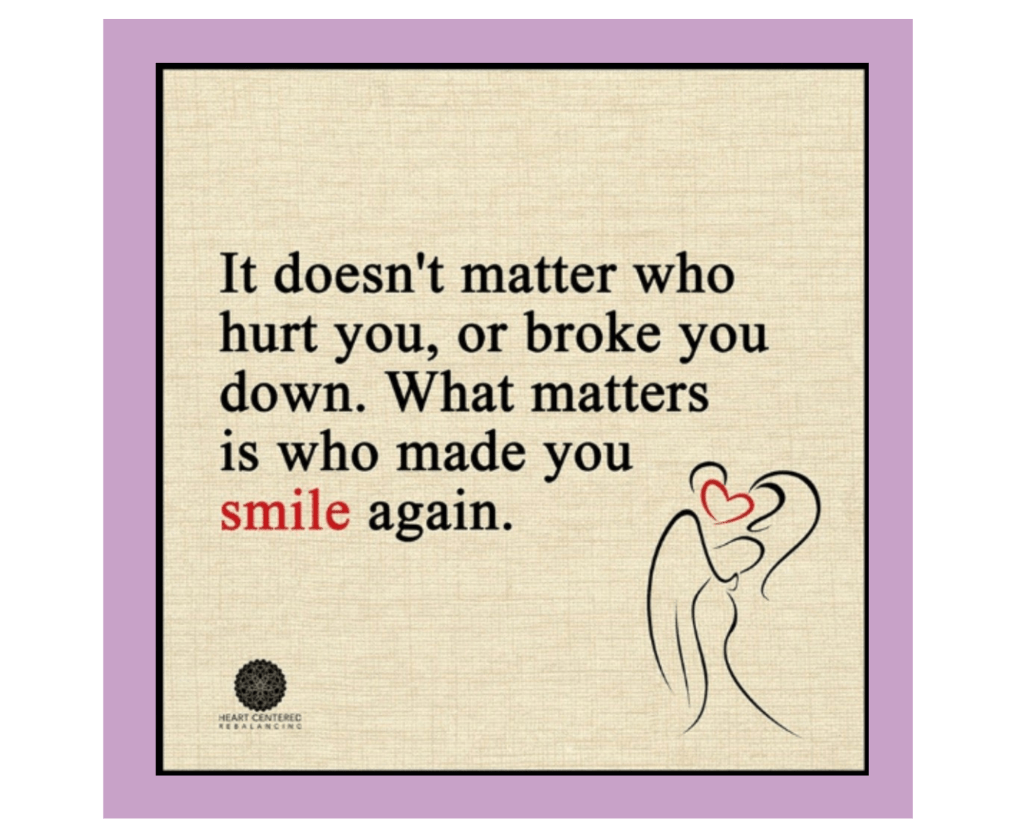
A light tan, textured background has a stylized line drawing of a couple who appear to be a man and a woman, embracing, with a heart covering their faces. The black serif font says, “It doesn’t matter who hurt you, or broke you down. What matters is who made you smile again.” The word “smile” is in red. The lower left-hand corner logo says “Heart Centered Rebalancing.”
NO.
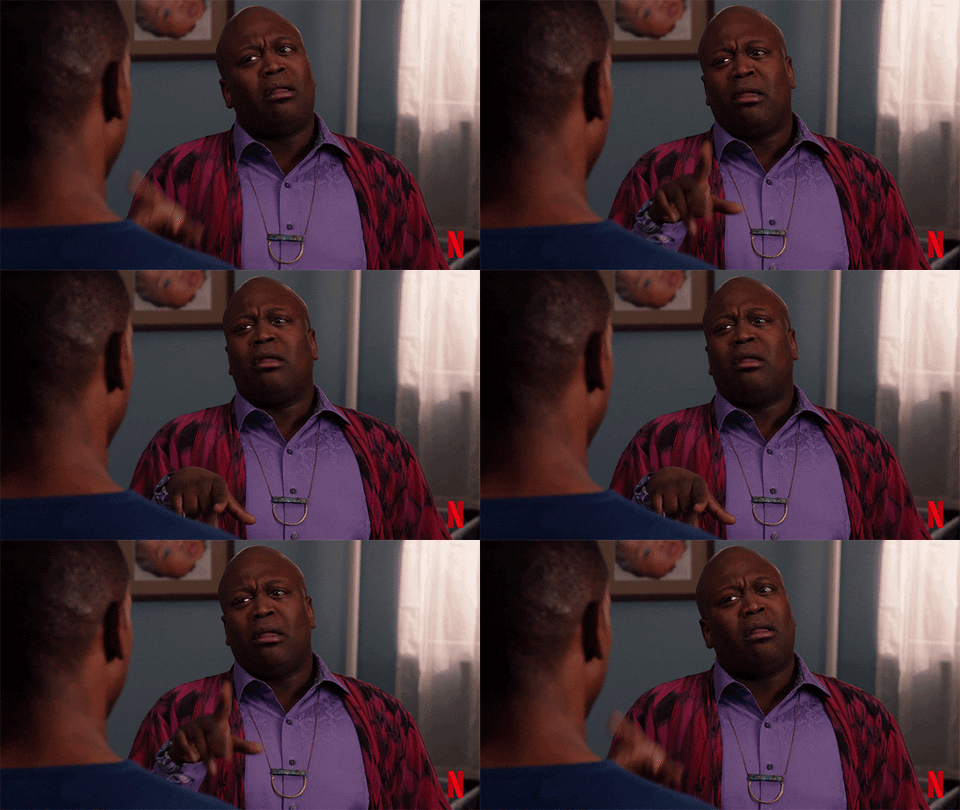
Animated gif of the character Titus from “The Unbreakable Kimmy Schmidt” shaking his head “no” and also shaking his finger “no”
NO.
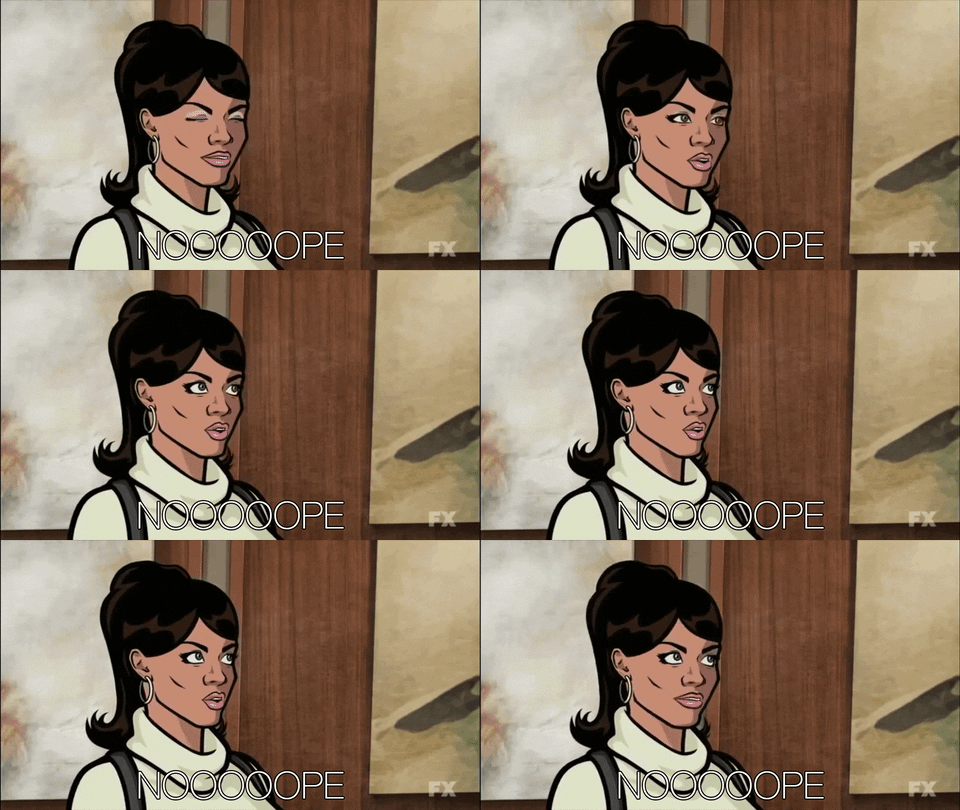
Animated gif of the character Lana from “Archer” saying “noooooope”
NO.
Animated gif of a white bird vigorously shaking its head from side to side.
NO.
Animated gif of sock puppet aliens from “Sesame Street,” looking at a rotary telephone and saying, “Nope nope nope.”
NO.
You don’t need to invalidate your partner’s (or your own) history of trauma in order for good times to also exist.
Animated gif of a star trailing a glittering rainbow from NBC’s “The More You Know” TV campaign from the ’90s
Three guesses about who wrote this:
A person who once caused another person to break down and just wants them to get over it, already.
A person who wants to be the person who makes someone else smile again, once they just get over that time they were broken, already.
The categories of “having been hurt” and “being able to smile” are not mutually exclusive.
Why are they being presented as if they are? Let’s explore!
I get the sense that the author was going for a chiasmus-type thing, and failed, but they wanted the basic infrastructure to uphold the illusion of forethought.
I could probably find a more precise rhetorical term for this setup than “failed chiasmus,” and maybe some day I will learn it, and then update this post. Hold your breath for that. #itsbeenthreeyearsandistilldidntdoit
At any rate, let’s see how the basic point holds up without the syntactic support of not-quite-chiasmus.
“The identity of who hurt you and how they did it isn’t important, as long as you don’t forget that there are also people who make you happy!”
“It’s important to remember to smile after you’ve been hurt by abuse, and also that you remember to give humble li’l me sufficient credit for making you do it. Smile, that is!”
“The experiences that shaped you aren’t as important to me as the warm, fuzzy feelings I want you to be having right now!”
“Happy is better than sad!”
We’ll just table cisheteronormativity for now. (Which, I know, is basically all day every day in so many contexts, but this blog post isn’t gonna fix all those. If I find compelling evidence that this image and message were created by queer folx for queer folx, I’ll certainly update some of my commentary.)
I just doubt that the creators of this image were progressive or intentionally transgressive with respect to gender, sexuality, or intimate relationships. I think we’re safe to read this as a stylized rendering of a passionate cis-man-to-cis-lady embrace and also possibly they are getting married.
If this was a photo in this couple’s scrapbook, I would interpret the big ol’ heart sticker covering their faces as an effort to mask obvious tension, rather than as a cheerful decoration.
That dude just gives me bad vibes. I can’t read his body language as unaggressive.
He’s leaning down and leaning in. His hug looks restraining, and she kind of looks like she’s pushing back on his chest.
Just me?
Animated gif from Looney Tunes with the character Pepe le Pew forcefully hugging a black cat who he believes to be a skunk while she is trying very hard to escape his unwanted embrace
Animated gif of a scene from the film “Promising Young Woman” with a male character gently and creepily kissing the nose of the apparently nearly catatonic protagonist
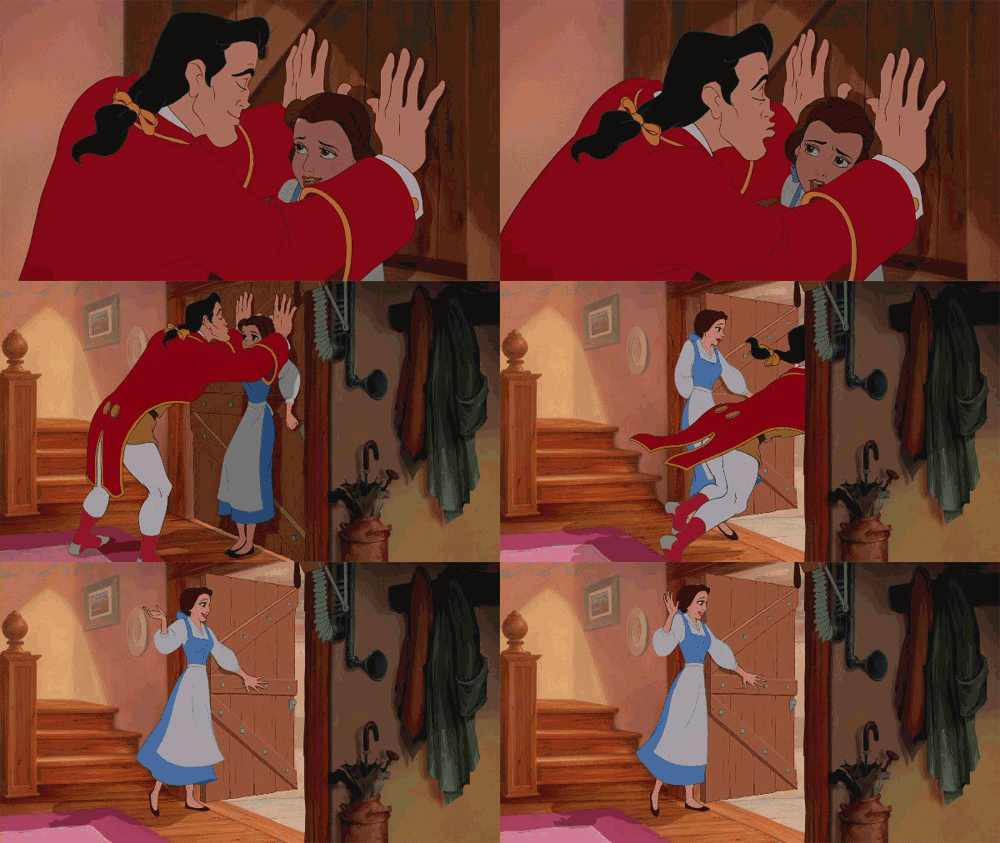
Animated gif from Disney’s “Beauty and the Beast” showing the character Gaston leaning aggressively in to plant a non-consensual kiss on Belle after he’s weirdly abruptly proposed to her, and she backs into the door and opens it outward behind her so that he falls outside
On a side note, when I looked for animated gifs à la Pepé le Pew, I was surprised at the frequency of this same posturing: taller man on left, leaning down, arms constraining if not restraining, lady looking up and backing away.
Ew.
Anyway, it turns out that it can matter that you were hurt and that you are ready to smile at the same damn time. The latter doesn’t cancel out the former.
It’s entirely reasonable to be suspicious of people who are aggressively insistent that you have to “get over it, already.”
And it’s entirely reasonable to remember that you can take the credit for learning to smile again all for yourself.
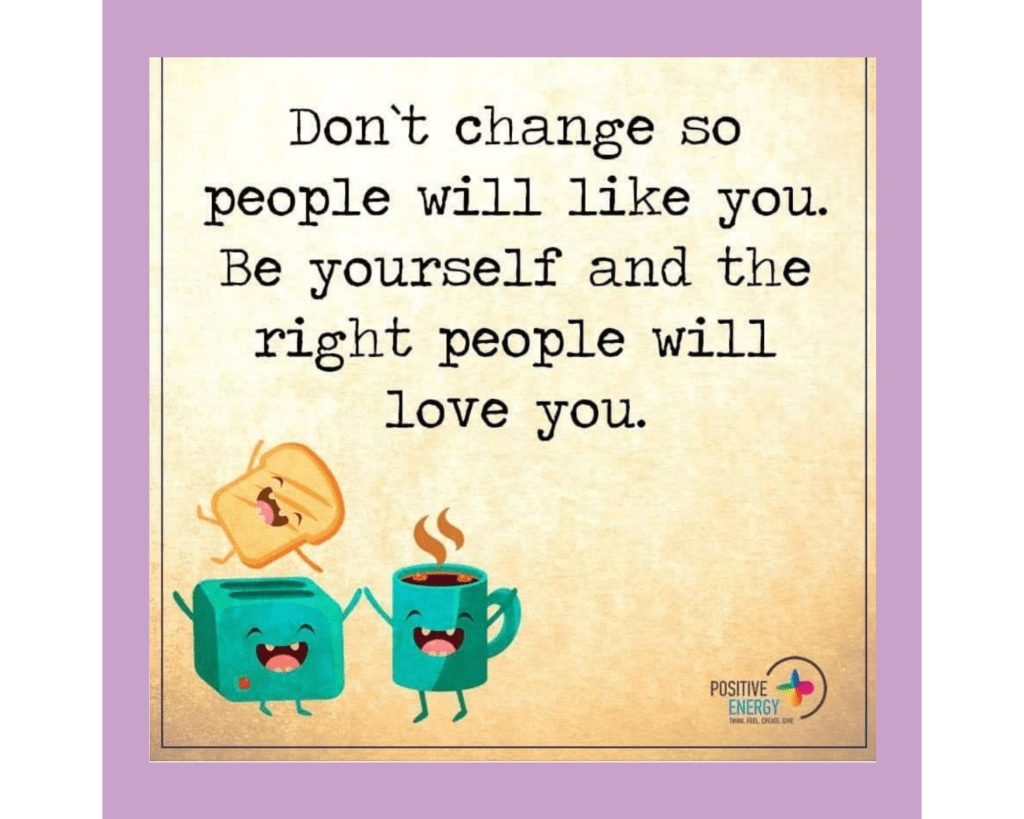
On a light brown, dappled background, a typewriter font says, “Don’t change so people will like you. Be yourself and the right people will love you.” In the lower left-hand corner, there is a cartoon picture of a toaster with a face high-fiving a coffee mug with a face, while a piece of toast with a face jumps out of the toaster. The logo in the lower right-hand corner is for the site “Positive Energy.”
As always, I grant that there is often a nugget (or more) of valuable insight tucked into the questionable folds of these macros.
So I’ll affirm the message that your authentic self has inherent value.
But enough of that talk.
Do you really want to hang out with anyone who goes around designating whole-ass humans as “right” and “wrong”?
“Don’t change . . . and the right people will love you.”
I can’t help reading “change is bad” as the dominant message, when “you deserve love” is probably a more salient takeaway.
I get that the macro aims to convey a simple message. “Right” people will naturally gravitate to other “right” people, who love each other as they are. But this also implies the existence of “wrong” people with the “wrong” kind of love, and dang.
That just doesn’t hold water.
Sometimes, the “wrong” people can sound a lot like the “right” people because they are enabling you to suck and/or to not really be yourself.
Sometimes self-proclaimed “right” people, who give you lots of supportive lip service, secretly thrive on shaming you from their high, high horses (and I mean tall-type high, y’all, not stoned ponies).
A lot of change-resistant folx like to invoke the defense that “I’m just being who I am / telling it like it is!” when they’re really just being intransigent assholes.
Sometimes, changing in response to the fact that people don’t like you is called “growth.”
There are always people with a vested interested in your being ignorant, downtrodden, demotivated, and dependent, and so they don’t want you to grow.
And those people just might be your family and friends, whose opinions may seem exactly like the “right” ones to value.
Those apparently “right” people might be the loudest about delivering the words to your ears that “they love you just how you are,” without bothering to specify that what they love about how you are is your willingness to permit them to suck and/or not grow.
“Be yourself” is not necessarily bad advice, but don’t fool yourself into believing that you never need to change or that “right” people even exist.
In terms of the image chosen to accompany this quote, I feel like a coffee-maker should be participating in the good times.
I mean, we’ve got toast and toaster together. Coffee and coffee-maker feels like a natural parallel, right?
The coffee is just personified by its vessel, though.
I wonder why toast is a sentient entity, but coffee is not.
Granted, I’m not aware of any liquids with personalities, but none of these characters are technically living things anyway, so at that point I don’t see why a solid state is a necessary criterion for a face.
They also all have exactly the same face, and I’m struggling with that.
It is a very cheerful face, for what it’s worth.
Anyway, when you think about it, toast is really just bread that has changed to be better liked by those who encouraged it to change in the first place.
The bread / toast depicted here always had intrinsic value, but its appliance buddies certainly seem thrilled with the outcome of the toasting.
Does this technically make them the wrong people (or people-like things) for pressuring their bread friend to change according to their preference? Or are they the right people-like things because they love that the toast is being its authentic self?
We can’t know if the bread became toast with the goal of being better liked by the coffee mug and toaster (and I question whether the toaster is able to recognize the influence of its own cultural bias).
If the bread decided to change just to earn the shallow approval of its judgey friends, then the message is kind of like, “Have a little self-respect, Bread.”
But if the change was motivated by truth-to-self rather than desire for popularity, it’s good that the appliances approve of the change, right? “Yay for Toast!”
Where does our ability to evaluate motive begin and end?
All we know for sure is that the visible impact of Bread’s choices is that it is now Toast.
Everyone looks happy, but that doesn’t mean everyone is happy.
I really want to believe that Giant Coffee Mug isn’t judging Toast because of its own projected shame.
I want to believe that Toast is living its best life, surrounded by its supportive friends.
In that case, we all deserve the kind of love that Toast has.
 Pith Rant
You must be logged in to post a comment.